
Sadly, earlier this year, Jack Layton, leader of the NDP party, passed away. Layton was a politician that the Canadian queer community could count on as an ally. In fact, one of his last public appearances was at the Toronto Pride Parade on July 3rd. Xtra!, Canada's LGBT News listed a timeline of the support Layton gave the queer community:
Nov 8, 1982 – Jack Layton is elected alderman of Toronto City Council Ward 6, with strong support from the gay and lesbian community. (**Note: This was only 4 years after Harvey Milk was elected and then killed.)
1985-1991 – Layton serves as chair of Toronto’s Board of Health, overseeing the city’s response to the growing AIDS crisis, including safer-sex education and distribution of condoms. Layton told Xtra in 2006:
“We had calls at the time for closing the bathhouses and talking about abstinence and absolutely not handing out condoms. So we went on a very active campaign specifically to hand out condoms and to make sure that public education was going on in the bathhouses.”
May 1987 – Layton calls for the city to spend $2.1 million on a special AIDS defence team. It is the first time any such plan has been proposed by a city. At the time, there were at least 232 people who had contracted AIDS in Toronto.
July 9, 1988 – At his wedding to Olivia Chow, Layton reportedly expresses his desire to see the day when his gay and lesbian friends can marry under the law. Seventeen years later, he would cast one of the crucial votes for marriage equality in Parliament.
1989 – Layton assists the Hassle Free Clinic in presenting motions to the Board of Health and Toronto City Council supporting anonymous testing. At the time, provincial law banned anonymous testing and required positive HIV test results to be reported to the Ministry of Health. Both council and the board called on the province to change the law. The law was eventually changed in 1991 after a change in government.
July 5-16, 1990 – Layton plays a crucial role in brokering peace between the city and gay bathhouse operators.
The city was cracking down on bathhouses and denying new licences to operators. When Peter Bochove tried to open what would eventually become Steamworks, his permit application was denied and he was forced to go to the courts, which ruled in his favour. The city continued to refuse his permit application, forcing Bochove to seek a contempt of court ruling, which could have put the city on the hook for more than $1 million in damages. Layton got council to approve Bochove’s permit in exchange for his abandoning the damages. The council decision set a precedent of legislative approval for bathhouses in the city, protecting bathhouses from future city harassment.
June 1996 – Layton is celebrated as a community hero by the Toronto Pride Day Committee.
Jan 23, 2003 – Layton is elected leader of the federal NDP.
Oct 6, 2004 – Jack Layton delivers his first speech in the House of Commons. He describes his riding of Toronto-Danforth. At one point, he notes:
“Finally, I would like to mention that it is the location of a very special church called the Metropolitan Community Church. It is a church wherein the first gay marriage was performed in Canada [NOTE: On Jan 14, 2001]. I had the experience of being there and I am very proud to have been there. It is the home of the gay and lesbian community in many ways, and it is one that speaks out on the issues of human rights.”
Layton also calls for equal marriage in his maiden speech and excoriates the Martin government for failing to enact it.
June 28, 2005 – Parliament passes the same-sex marriage law. Layton had decreed that the issue was a matter of equality and that the NDP would have to stand united in favour of it. He was the only party leader to whip the vote on same-sex marriage. When NDP member Bev Desjarlais voted against the bill, she was relieved of her critic's duties and eventually forced from the NDP caucus. Same-sex marriage became law on July 20, 2005, after passing through the Senate and receiving royal assent.
Oct 17, 2005 – Layton delivers a tribute in Parliament to recently deceased gay rights activist George Hislop:
“Mr Speaker, I rise today to pay tribute to George Hislop, a leader and activist in the gay community who passed away on Oct 8. I was blessed to be able to be with him hours before he went on his next journey.
“George Hislop was a friend and mentor to many people in the gay community. George was a founder of the Community Homophile Association of Toronto in 1971, one of Canada's first gay rights organizations. In 1980, George was the first openly gay candidate for elected office in Canada, when he ran for Toronto city council. Although he was not successful, George inspired gay and lesbian political activists across the country.
“George was a key figure in the protests surrounding the Toronto bath raids of 1981. After the death of his partner, Ron Shearer, George led the ongoing fight for equal CPP survivor benefits for gay and lesbian couples.
“I will miss George enormously. George first taught me about the lesbian and gay community. He explained the issues, introduced me to the people in the community and offered his insight, as he did to so many. His strength, humour and dedication to the fight for equality have been inspirational to me and all of us.
“Canada has lost a leader in the passing of George Hislop.”
Oct 27, 2009 – Layton calls on the government to compensate gay men and women who were discharged from the military for being gay or lesbian:
“Mr Speaker, 17 years ago today the Federal Court reached the conclusion that gays and lesbians should be allowed into our armed forces because otherwise we would be violating the Canadian Charter of Rights and Freedoms. This verdict allowed openly gay men and women to join the armed forces of Canada.
“Unfortunately, prior to that time, people were discharged, often given dishonourable discharges, as a result of their sexual orientation. That has left a stain on our history.
“I am going to ask the prime minister whether he would agree that the government should apologize for those decisions and provide compensation.”
Prime Minister Stephen Harper says that “the government is not here today to correct all the wrongs of the past.”
In Canada, we have had a number of openly queer politicians including:

Andre Boisclair - as leader of the Parti Quebecois, Boisclair was the first openly gay politician to become leader of a party that had legislative representation.

Allison Brewer - Was the leader of the New Brunswick NDP and is very active in the protection of LGBT rights and access to abortion.

Scott Brison - MP - started out as a Conservative but crossed the floor to become a Liberal. Married his longtime partner in 2007 after having announced their engagement once same-sex marriage was legalized.

Libby Davies - served on Vancouver City Council and was instrumental in making Vancouver a Nuclear Free Zone. She is an MP representing the NDP and is currently the Deputy Leader. Davies is known for coming out in the House of Commons during a speech supporting same sex marriage.

Chris Lea - leader of the Green Party of Canada from 1990 - 1996. He was the first openly gay politician to become the leader of a party in Canada.
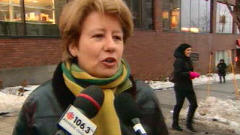
Agnès Maltais - In 2003, Ms. Maltais became the first openly lesbian member of the National Assembly, when she came out to an audience at Laval University.

Svend Robinson - former MP and member of the federal NDP. He is well known for his left leaning political stand and his support for the right to physician assisted suicide.
All of these queer politicians and others have led the way in defining and supporting LGBT rights but they also have other issues they want to support. Being queer does not define who these men and women are.
Sexual orientation should not define us, say gay politicians
Openly gay politicians want to be known for their competence and not just for being gay.
MONTREAL -- Openly gay politicians want to be known for their competence and not just for being gay.
This was one of the observations made by seven elected officials during workshop Friday at an international conference on lesbian, gay, bisexual and transgender human rights being held in Montreal in conjunction with the first World Outgames.
The challenges, pitfalls and pluses of being a lesbian, gay, bisexual or transgender politician were discussed, as was the decision making process on when to come "out" in a political career.
Gathered on the dais were Svend Robinson, former Liberal MP from Burnaby, B.C., Agnes Maltais, member of the Quebec National Assembly, Georgina Byers, the world's first transsexual Member of Parliament in her native New Zealand, Ulrike Lunacek, an MP from Austria, Volker Beck, with the German government, Oras Tynkkynen, MP in Finland and Joke Swiebel, a former member of the Netherlands Labour party.
The Outgames are the largest sports gathering of gay, lesbian and transgendered athletes in the world, featuring more than 13,000 competitors from 111 countries.
Montreal Gazette
This was one of the observations made by seven elected officials during workshop Friday at an international conference on lesbian, gay, bisexual and transgender human rights being held in Montreal in conjunction with the first World Outgames.
The challenges, pitfalls and pluses of being a lesbian, gay, bisexual or transgender politician were discussed, as was the decision making process on when to come "out" in a political career.
Gathered on the dais were Svend Robinson, former Liberal MP from Burnaby, B.C., Agnes Maltais, member of the Quebec National Assembly, Georgina Byers, the world's first transsexual Member of Parliament in her native New Zealand, Ulrike Lunacek, an MP from Austria, Volker Beck, with the German government, Oras Tynkkynen, MP in Finland and Joke Swiebel, a former member of the Netherlands Labour party.
The Outgames are the largest sports gathering of gay, lesbian and transgendered athletes in the world, featuring more than 13,000 competitors from 111 countries.
Montreal Gazette
© (c) CanWest MediaWorks Publications Inc.

No comments:
Post a Comment