Tuesday, December 13, 2011

Understanding the Alternately Abled

People

Sometimes we can be blinded by the behaviour of someone with mental illness, autism or delayed development.

A Beautiful Mind


After you have made out your list, look at this one and imagine what life would have been like if these people had not been encouraged to reach their potential?


  • Albert Einstein - didn't talk till 3, had a learning disorder
  • Alexander Graham Bell - learning disability
  • Cher - dyslexia
  • Christopher Reeves (played Superman) - quadraplegic, unable to breath on his own.  Continued to direct movies after his riding accident made him quadraplegic.
  • David Blunket - British member of parliament - blind
  • Goya - deaf, famous Spanish painter
  • Vincent Van Gogh - Bipolar disorder, famous Dutch painter.
  • John Milton - blind, wrote Paradise Lost
  • Beethoven - deaf
  • Michael Bolton - deaf
  • Marlee Matlin - deaf, comedian
  • Big Daddy Taz - Bipolar disorder, comedian
  • Stephan Hawking - has ALS, working on string theory, and developed big bang theory and black hole theory.
  • Dan Akroyd - Asperger's syndrome, actor in films like Ghostbusters and Blues Brothers
  • Daryl Hannah - autistic, actress in films like Kill Bill and Kill Bill 2
  • Satoshi Tajiri - autistic, designed and developed Pokemon
The list goes on and on.
Read this article together - 

UN adopts landmark bill for disabled rights


Discuss these issues in class.

Genocide

Women's Rights

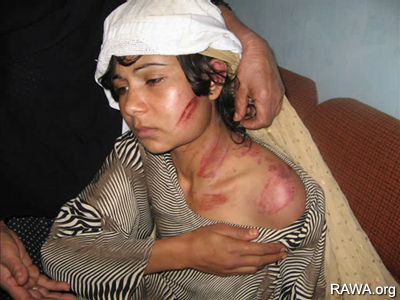
Women's rights have not always and are still sometimes not upheld in this world in which we live.  Women, as citizens of this world, are entitled to all the same rights as men under the UNHR.  There are, however areas in which women's rights are violated more often than men.  What rights do you think these might be?

In some countries, women's rights are institutionalized or supported by law, local custom, and behaviour.  In other places women's rights may be ignored or suppressed. This is often the case when local custom through inherent historical and traditional bias in regards to women's and girl's rights differs from broader notions of human rights and therefore favours men and boys.

Issues commonly associated with notions of women's rights include, though are not limited to, the right: to bodily integrity and autonomy; to vote (suffrage); to hold public office; to work; to fair wages or equal pay; to own property; to education; to serve in the military or be conscripted; to enter into legal contracts; and to have marital, parental and religious rights.

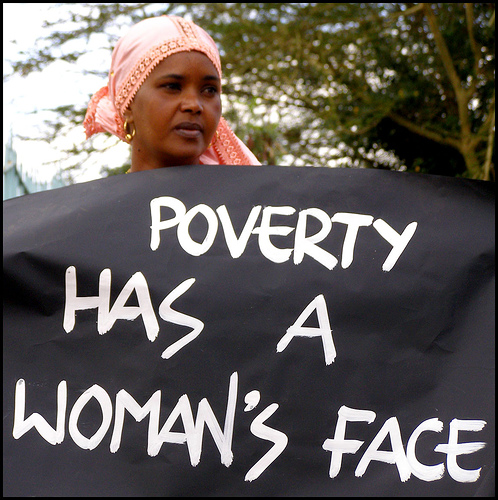
In many, many countries woman struggle just to keep themselves and their children alive.  Worrying about the vote, about holding public office, about legal contracts, etc. are all beyond their ken. What are some of the issues of survival that keep women so occupied that they cannot stand up for their rights?


But it is not all bad news.  There are people who are stepping forward to help women help themselves all around the world.


We are going to watch the film, "End of Poverty".  We will discuss this film in class.

Homework
What would you be willing to do to help impoverished women or children around the world?  Write in your blog.


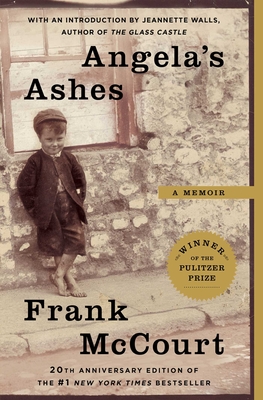
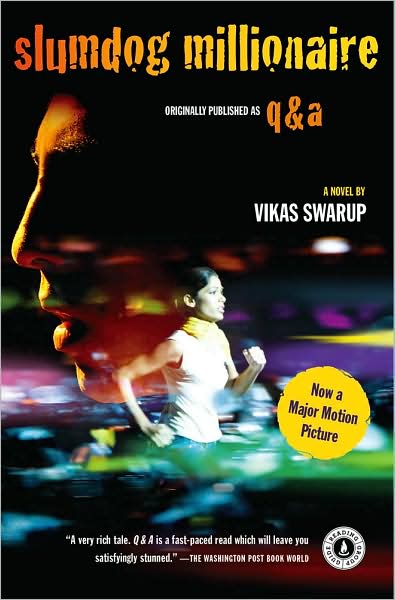
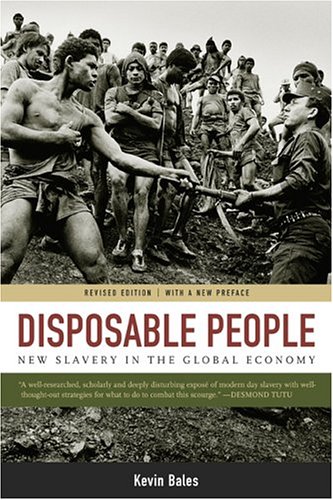
If you want to read books on poverty, try:

Child Soldiers

All over the world, children are recruited or kidnapped and forced to become soldiers.  They face combat, they cook and clean, carry supplies and weapons, and they are forced to act as sexual partners to the adult soldiers.  Children lose their futures and often their lives.


Discussion:
  • Not all children involved in armed conflict are kidnapped.  Some are recruited and some choose to seek out the military forces.  Why would they do this?  What choices do they have?
  • What are the reasons for using children in armed conflict?
  • What are the moral issues of using children in armed conflict?
  • How does society suffer when children are used in armed conflict?
  • Which articles from the UNCRC are meant to protect children from use in armed conflict?
In your homework you read about Omar Khadr who was a 15-year-old child soldier in Afghanistan.

How are child soldiers supposed to be treated when they are captured? 

We will now watch the CBC documentary, US vs. Omar Khadr.  Think about how Omar Khadr is treated and how this treatment fits into the Articles.  If you miss watching this movie in class, you can see it on YouTube.


Read the following stories: Globe and Mail  New York Post War and Peace.


What have NGOs and other organizations done to help child soldiers.  Watch this video by Witness (www.witness.org).


For homework you have two pieces of writing to do in your blog:
  1. What you think about Omar Khadr? What is your opinion as to his guilt or innocence and his treatment at Guantanamo Bay.
  2. Write about the differences in the three stories.  Why are they so different?  Can you see any flaws in their logic?  How would you answer each of these writers?
Want to read about child soldiers?  You can try these books in the library:


    Rights of the Child

    Working On The Building
    The Orphanage in Jo Slovo

    The Orphanage in Jo Slovo

    The Babies in the Creche
    The Children

    Lions Club Helping With the Wall

    Children Celebrating the New Playground

    First Time Ever With A Bouncy Castle - Christmas '10

    Fascinated by a Puppet Show - Christmas '10

    Earlier in the school year, we heard from Neil Tubb, talking about Project Hope.  In the pictures you have seen above, what rights have been protected for these children?

    Read in GV pp 23-34.  Consider the following:
    • What rights are being violated and what are being upheld in these short columns?
    • What prevents the rights from being up-held?  
    • What role does education play in changing the situation for the poor in developing countries?
    • What can you, personally, do to help create change?
    • At the top of this blog it says "If we do not understand why something is wrong, we cannot make it right."  Do you agree with this statement?  If it is true, why did the lessons learned from the Holocaust not prevent the Rwandan genocide?
     When you have considered these, go into the library, log in to your blog and write a reflection on your reading and these questions.

    Homework:  Read pp 37-45 in GV.

    United Nations Convention on the Rights of the Child

    Place your Human Rights posters up around the room.  Looking at these posters, get into small groups (3 or 4 people) and brainstorm how individuals and world leaders can and should protect and honour these rights.


    • Can the rights in the UDHR be applied equally to adults and children?  
    • What are the differences between adults and children?
    • Do children need rights of their own?  Why or why not?
    • What rights should children have that adults don't need?

    Homework
    Each person will be assigned two articles of the United Nations Convention on the Rights of the Child (UNCRC).  Create a poster for each just as you did for the UDHR.

    Human Rights


    We will be watching the movie: Global Issues for Students: Human Rights.  While we are watching this film you should have your blog open in front of you.  Write short answers to the following questions in your blog:
    1. What was the purpose of human rights movements in the 19th and 20th centuries?
    2. In what ways are human rights violated today?
    3. What limitations does the Universal Declaration have?
    4. In what ways do women suffer discrimination in various countries around the world?
    5. What is Sharia?  Why do some consider it to violate human rights agreements? 
    6. Why did the US response to 9-11 spark international concerns about possible human rights violations?
    7. What happened in Tiananmen Square in June 1989.
    8. How do NGOs defend human rights?
    9. What conditions limit political and and legal efforts to protect human rights?
    Once the film is finished, consider one of the following topics and write what you think - paragraph, point form, etc., as long as you can express your opinion in a way that I can understand.  You may also include pictures or video clips that illustrate your opinion.

    • Torture of criminal suspects with the aim of extracting confessions is a routine practice in many countries.  Is there ever a time when this kind of behaviour is justified?
    • Low-paid workers, often children, toil in sweatshops around the world.  How do you think we (in Canada) could best address the problem of worker exploitation?  What is the best way to ensure that companies adhere to a code of labour standards?
    • Who is ultimately responsible for ensuring that human rights are protected around the world?  Does Canada have a responsibility or even a right to intervene in countries where violations are occurring?


    Monday, December 12, 2011

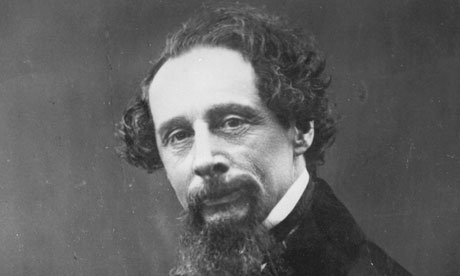
    Charles Dickens - An Early Activist

    Charles Dickens


    Dickens' story is one of rags to riches. He was born in Portsmouth on 7 February 1812, to John and Elizabeth Dickens. The good fortune of being sent to school at the age of nine was short-lived because his father was imprisoned for bad debt. The entire family, apart from Charles, were sent to a workhouse and Charles was sent to work in Warren's blacking factory and endured appalling conditions as well as loneliness and despair. After three years he was returned to school, but the experience was never forgotten.

    Because of his early years, Dickens was highly sensitive to the misery and poverty that surrounded him.  He was determined to make a difference.  

    Dickens began his literary career as a journalist. As his popularity as a writer increased, his newspaper editor allowed him to publish serialized stories in each edition of the paper.  These stories, full of captivating characters and exciting events, caught the attention of the nouveau-riche in England creating awareness of the horrible conditions under which the poor of England lived.  Dickens' writing helped set the stage for change.


    A Christmas Carol is one of Dickens' most beloved and best known tales.  As we watch this film, consider the following things:

    • Under what kind of conditions do the people in this film live - all people, not just the poor?  Consider: Scrooge, the scrap collectors, the Cratchetts, nephew Freddy, Alice, the Fezziwhigs, Mrs. Dilber, etc.
    • Were there any attempts at making life better for the less fortunate?  If yes, give examples.
    • How do the conditions in the Victorian era compare to now?