Monday, November 14, 2011

Giving a Face to the Missing Women


One factor that allowed the public to remain unaware of the missing women on Vancouver's Downtown Eastside and on BC's Highway of Tears was that these women were not given a face in the media.  In order to recognize and honour these women, today we are going to give them back their face.  You will choose one of the missing women and create a poster with the following information:
  • a picture of her face,
  • her name, 
  • age when she went missing,
  • information about who she was and where she was from,
  • information about her disappearance.
  • create a poster that you would feel comfortable showing to her family - you are trying to honour this woman.
Tomorrow we will create a display on the wall outside our classroom so that other students can see the women that have gone missing and help to honour them.

You will find information at the following websites:

Don't limit yourselves to just these sites.  Try to dig a little deeper and find more information.

Finding Dawn

Lorraine and Dawn Crey


We will be watching the movie "Finding Dawn".  As you watch this film, I want you to consider the following issues:
  1. Systemic racism - how is the inherent racism in the justice system demonstrated in the story of Dawn Crey?
  2. How did Dawn suffer from a loss of identity and how did this affect her?
  3. What made the missing women of the downtown eastside nameless and faceless?
  4. Can you see a difference how the women on the Highway of Tears and the women of the downtown eastside are viewed?  How was the response of the community different?  Why might that be?
  5. "Women's issues are men's issues too."  We have already discussed this in class. How is this statement demonstrated in this film?

Read two of the following articles:
  1. Stolen Sisters
  2. Seeking Justice for Canada's 500 Missing Native Women.   
  3. Investigating Violence Against Aboriginal Women
  4. Vancouver Eastside Missing Women
  5. Racism Keeps Native Women's Killer Anonymous 
  6.  Police had enough to get a warrant for Pickton in 1998.

  7. Police blasted at Missing Women inquiry for failures to catch killer sooner 

  8. Racist attitudes hampered work on Pickton file


    Write a one paragraph response in your blog to these articles.

      Rights of Women - Focus on Afghanistan


      This very shocking picture of a young Afghan woman with her nose cut off appeared on the cover of Time Magazine on Thursday, July 29, 2010.  The message of the picture and the headline is clear.

      Read the article and the NY Times response posted below.


      Taliban vs. Muslim

      What happened to Aisha at the hands of the Taliban is terrible, however, it is important to understand the difference between Taliban beliefs and Muslim beliefs.  The abuses that we hear about that women face in Afghanistan and in some other Muslim countries are not according to Muslim law.

      Think of Christianity.  There is a wide range of religions under the blanket term "Christianity": Catholic, Protestant, and Orthodox.  And under these headings there are even more divisions.  The range of beliefs and practices amongst Christians - from United Church to Southern Baptist to Roman Catholic to Fundamentalist Mormon - are very wide.

      Look at the wide range of attitudes by these famous Christians:


      Archbishop Desmond Tutu 

      “If you are neutral in situations of injustice, you have chosen the side of the oppressor. If an elephant has its foot on the tail of a mouse and you say that you are neutral, the mouse will not appreciate your neutrality.”


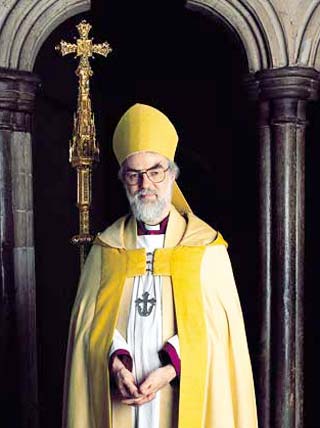
      Rowan Williams, Archbiship of Canterbury


      “I am certainly not ascribing to the defenders of euthanasia or assisted dying any motive but the desire to spare people unnecessary suffering,”


      Jerry Falwell


      "Homosexuals are brute beasts…part of a vile and satanic system that will be utterly annihilated, and there will be a celebration in heaven."


      Bono - "To be one, to be united is a great thing. But to respect the right to be different is maybe even greater."


      Pat Robertson - (About Venezuelan President, Hugo Chavez)  

      "...if he (Chavez) thinks we're trying to assassinate him, I think that we really ought to go ahead and do it."


      Mother Teresa 

      "If we really want to love we must learn how to forgive."


      Just as there are a wide range of Christian groups, there are also a wide range of Islamic groups: Shia, Sunni, Kharijite, Sufi, Ahmadiyya, and others.  And as with Christian groups, amongst Muslims there is a wide range of attitudes.


      Shirin Ebadi (First Iranian and first Muslim woman to win the Nobel Peace Prize) 

      “We must not enable anyone to impose his personal view regarding religion on others by force, oppression, or pressure.”


      Sheikh Haron (Muslim cleric, peace activist and lawyer speaking to the Australian prime minister about Australia's role in Afghanistan) 

       "I have a question, did your stomach turn when you heard the news that the Australian army has killed innocent civilians."


      Osama Bin Laden 

       “Every Muslim, the minute he can start differentiating, carries hate towards Americans, Jews, and Christians; this is part of our ideology. Ever since I can recall I felt at war with the Americans and had feelings of animosity and hate toward them.”


      Shaykh Waleed Basyouni (scholar) 

      "The Muslim ummah (an Arabic word meaning "community" or "nation") cannot take another war. Let’s unite on our common grounds rather than focus on our differences. Let us focus on what we agree upon and negotiate/discuss matters based upon them. You will find that most of these differences will begin to melt away."


      Hassan Al-Banna (schoolteacher and imam) 

      "The supreme martyrdom is only conferred on those who slay or are slain in the way of God. As death is inevitable and can happen only once, partaking in jihad is profitable in this world and the next."


      Dayiee Abdullah (only openly gay imam) 

      “To be gay and Muslim, at times, people will say that it is an oxymoron. But in actuality, it’s a formulation that shows the diversity within Islam; that people can be a variety of backgrounds. The Quran says to look to the nature of the world. And from that, you can see the diversity and understand that Allah’s understanding of the world and the universe in which he created is full of diversity; but you find the oneness, the tauheed unification of all, through those various diverse aspects.”

      Muslim Law, or Sharia:
      The following description of Sharia comes from The Council on Foreign Relations 
      What is Sharia?
      Also meaning "path" in Arabic, sharia guides all aspects of Muslim life including daily routines, familial and religious obligations, and financial dealings. It is derived primarily from the Quran and the Sunna--the sayings, practices, and teachings of the Prophet Mohammed. Precedents and analogy applied by Muslim scholars are used to address new issues. The consensus of the Muslim community also plays a role in defining this theological manual.

      Controversy: Punishment and Equality under Sharia
      Marriage and divorce are the most significant aspects of sharia, but criminal law is the most controversial. In sharia, there are categories of offenses: those that are prescribed a specific punishment in the Quran, known as hadd punishments, those that fall under a judge's discretion, and those resolved through a tit-for-tat measure (ie., blood money paid to the family of a murder victim). There are five hadd (bounds of acceptable behaviour) crimes: unlawful sexual intercourse (sex outside of marriage and adultery), false accusation of unlawful sexual intercourse, wine drinking (sometimes extended to include all alcohol drinking), theft, and highway robbery. Punishments for haddMazrui of the Institute of Global Cultural Studies in a Voice of America interview. These punishments remain on the books in some countries but lesser penalties are often considered sufficient.


      Despite official reluctance to use hadd punishments, vigilante justice still takes place. Honor killings, murders committed in retaliation for bringing dishonor on one's family, are a worldwide problem. While precise statistics are scarce, the UN estimates thousands of women are killed annually in the name of family honor (National Geographic). Other practices that are woven into the sharia debate, such as female genital mutilation, adolescent marriages, polygamy, and gender-biased inheritance rules, elicit as much controversy. There is significant debate over what the Quran sanctions and what practices were pulled from local customs and predate Islam. Those that seek to eliminate or at least modify these controversial practices cite the religious tenet of tajdid. The concept is one of renewal, where Islamic society must be reformed constantly to keep it in its purest form. "With the passage of time and changing circumstances since traditional classical jurisprudence was founded, people's problems have changed and conversely, there must be new thought to address these changes and events," says Dr. Abdul Fatah Idris, head of the comparative jurisprudence department at Al-Azhar University in Cairo. Though many scholars share this line of thought, there are those who consider the purest form of Islam to be the one practiced in the seventh century.

      It is important to look at certain practices in Islamic countries/regions in the context of the entrenched customs and cultural practices that occur there.


      This cross-over between culture and religion is not unique to Islamic countries and regions.  For example, there are still older people in villages in Sicily who believe in "malocchio" or the evil eye and turn to the Church to relieve themselves of this curse.


      There are many Muslims all over the world that are horrified by the Taliban interpretation of Sharia - just as horrified as people of other faiths.


      A good website to look at to see the treatment of women in Afghanistan is the Revolutionary Association of Women of Afghanistan (RAWA). 
       
      For homework, look through the website and write a response to this in your journal, keeping in mind what you have learned about Islam today.


      Women, Sex, and Power

      Women, Power, and Sexuality

      Both the Sexualization of Women and the Desexualization of Women has been used to remove women’s power.

      Sexualization occurs when a person’s value comes only from his/her sexual appeal or behaviour to the exclusion of other characteristics and/or when a person is sexually objectified or made into an object for another’s sexual pleasure.

      • Sexualization of young girls through toys (i.e. Barbie), clothing (A&F push-up padded bikini tops for prepubescent girls), advertising and other media, beauty pagents,online games (GirlsgoGames.com), etc. lead to severe problems for females of all ages: low self esteem, depression, eating disorders, self mutilation (i.e. cutting), suicide, etc.


      • Using women’s sexuality to promote economic growth removes women’s other characteristics, i.e. emotions, power, intelligence, compassion, talents, etc.


      • Women in the sex trade in North America have little or no voice/power. They are at the mercy of men, i.e. the pimps, the johns, the police, because of the law. Even in places where brothels are legal, i.e. Nevada, men run the brothels and live off the “backs” of the women. Only in New Zealand are the brothels operated as co-ops so that the women have a voice and an equal share in the profits.
      • Approximately 16,000 women per week are kidnapped and held in sexual slavery all over the world including Canada.


      Desexualization occurs when a person’s sexual appeal, characteristics, power or qualities are removed. This may happen physically, emotionally, or metaphorically.

      • Female genital mutilation (FGM) is a cultural, social and religious practice which is most common in the western, eastern, and north-eastern regions of Africa, in some countries in Asia and the Middle East, and among certain immigrant communities in North America and Europe. (an estimated 92 million women age 10 and up have undergone FGM). FGM is often motivated by beliefs about what is considered proper sexual behaviour, linking procedures to premarital virginity and marital fidelity. It is believed to reduce sex drive and to help her resist "illicit" sexual acts. When a vaginal opening is covered or narrowed the fear of pain of opening it, and the fear that this will be found out, is expected to further discourage "illicit" sexual intercourse. FGM is associated with cultural ideals of femininity and modesty, which include the notion that girls are “clean” and "beautiful" after removal of body parts that are considered "male" or "unclean". This is not a practice that is mentioned in either the Koran or the Sunnah but has become “law by custom”.


      • The idea of women as “chattel” and owned by her father until she is “given” to her husband. The dowry was originally given to the husband as the woman did not have intrinsic value on her own. Women before marriage were expected to be chaste or virginal. During the middle ages, men who attended crusades would require their wives to wear chastity belts so that they could be sexual only with their husbands.
      • The use of fashion to remove sexual qualities of women. An example of this was the “Twiggy” look from the 1960s or the flapper look from the 1920s. 

      Twiggy

      Flapper look


      By defining women by their sexuality or lack of sexuality does not allow women to be viewed as whole women.


      Homework: 
      1. Read Chapter 3 in Global Voices
      2. Essay on women's rights.
      Using the information from:
      • The F Word
      • Presentation by Project Respect
      • Blog posting on the Suffragettes' Movement
      • Iron-Jawed Angels
      • Blog posting on Women, Sex, and Power
      • Chapter 3 in Global Voices
      • Presentation by Annie on Women and Islam
      • Any other valid information you can find in print form or on the Internet
      Write a 500 word essay on one of the following topics.

      1.Women's role in supporting democracy.
      2. Women: A comparison of sexualization vs. desexualization.
      3.Women's rights in different cultures.

      This essay is to be posted on your blog and MUST include a proper reference list.  You may use the Citation Machine to create your reference list.  This essay will be done outside of class time and is due Friday December 9th.

      Suffragette Movement

      suf·fra·gette/ˌsəfrəˈjet/

      Noun:
      A woman seeking the right to vote through organized protest.

      suf·frage/ˈsəfrij/

      Noun:
      The right to vote in political elections.

      Women's suffrage is the right of women to vote and to run for office without any restrictions or qualifications such as property ownership, payment of tax, or marital status.** (What is missing here? Treats to those who can guess.) The movement's modern origins can be attributed to late-18th century France, although full suffrage did not come to France or the province of Quebec until much later. Limited voting rights were gained by some women in Sweden, Britain, and some western U.S. states in the 1860s. In 1893, the British colony of New Zealand became the first self-governing nation to extend the right to vote to all adult women, and the women of the nearby colony of South Australia achieved the same right in 1895. The first European country to introduce women's suffrage was Finland and that country produced the world's first female members of parliament in 1907.

      In 1979, women’s suffrage was explicitly stated as a right under the Convention on the Elimination of All Forms of Discrimination Against Women, adopted by the United Nations.


      The Famous Five were five Canadian women who asked the Supreme Court of Canada to answer the question, "Does the word 'Persons' in the British North America Act, 1867, include female persons?" in the case Edwards vs. Canada (Attorney General). The petition was filed on August 27, 1927,  and on 24 April 1928, Canada's Supreme Court summarized its unanimous decision that women are not persons.  The last line of the judgement reads as follows: "Understood to mean 'Are women eligible for appointment to the Senate of Canada,' the question is answered in the negative."

      The Famous Five were:

      • Emily Murphy (the British Empire's first female judge);
      • Irene Marryat Parlby (farm women's leader, activist and first female Cabinet minister in Alberta);
      • Nellie Mooney McClung (a famous suffragist and member of the Alberta legislature)
      • Louise Crummy McKinney (the first woman elected to the Legislative Assembly of Alberta, or any legislature in Canada or the British Empire) and
      • Henrietta Muir Edwards (an advocate for working women and a founding member of the Victorian Order of Nurses).


      Widows and unmarried women were granted the right to vote in municipal elections in Ontario in 1884. Such limited franchises were extended in other provinces at the end of the 19th century, but bills to enfranchise women in provincial elections failed to pass in any province until Manitoba finally succeeded in 1916. At the federal level in 1917, women gained a limited right to vote: women who were British subjects and had close relatives in the armed forces could vote on behalf of their male relatives. At the beginning of 1919, the right to vote was extended to all white women. The remaining provinces quickly followed suit, except for Quebec, which did not do so until 1940. Agnes Macphail became the first woman elected to Parliament in 1921.


      Look at the cartoons that were assigned to your group. What do you think the answers are to the following questions?

      1. From whose point of view are these cartoons drawn?
      2. What are the messages the cartoons are trying to convey?
      3. Is there an underlying message that is not immediately obvious? If so, what is it?


      Answer these questions on your blog for homework.
      What are the themes that are common to all of these cartoons? What things have changed for women and what have not?  How far have women really come?


      The information above and the cartoons tell us little of  the reality of the Suffragette Movement in Britain, Canada, and the US.  We will be watching the film "Iron-Jawed Angels" which gives a much clearer picture of what the suffragettes faced.

      Wednesday, November 9, 2011

      The "F" Word

      Why is it that women get mixed messages about whom they should be?

      We are going to be watching a film called The "F" Word.
      No...the "F" word is not the four letter one.  This one has eight letters.  Feminism.

      Before you watch this film, what do you think feminism means?  Are you a feminist?


      Do you think this cartoon is accurate?


      Make a list of reasons why someone might choose to call themselves a feminist.

      What are some of the disparities between men and women?

      Using a Venn Diagram, compare the following:

      1. What basic rights DO men and women have? 
      2. What basic rights SHOULD men and women have?
      3. What expectations are on men and/or women?
      4. What issues are specific to men/women?
      5. What issues are common to men and women?
        Now that you have looked at these questions, write a blog entry that examines this question:
      How are women's issues also men's issues?

      Tuesday, November 1, 2011

      Matthew Shephard, Laramie Wyoming and The Day of Silence


      Matthew Wayne Shepard (December 1, 1976 – October 12, 1998) was a student at the University of Wyoming who was tortured in a field near Laramie, Wyoming, in October 1998. He was attacked on the night of October 6–7, and died at Poudre Valley Hospital in Fort Collins, Colorado, on October 12 from severe head injuries.

      During the trial, witnesses stated that Shepard was targeted because of his
      sexual orientation. Shepard's murder brought national and international attention to the contention of hate crime legislation at the state and federal levels.

      On October 22, 2009, the United States Congress passed the Matthew Shepard and James Byrd, Jr. Hate Crimes Prevention Act (Matthew Shepard Act for short), and on October 28, 2009, President Obama signed the legislation into law.

      "The horrific events that took place shortly after midnight on October 7, 1998 went against everything that Matt embodied. Two men, Aaron McKinney and Russell Henderson, led him to a remote area east of Laramie, Wyoming. He was tied to a split-rail fence where the two men severely assaulted him. He was beaten and left to die in the cold of the night. Almost 18 hours later, he was found by a bicyclist who initially mistook him for a scarecrow. Matt died on October 12 at 12:53 a.m. at Poudre Valley Hospital in Fort Collins, Colorado with his family by his side. His memorial service was attended by friends and family from around the world and garnered immense media attention that brought Matt’s story to the forefront of the fight against bigotry and hate. The life and death of Matthew Shepard changed the way [people] talk about, and deal with, hate in America. Since his death, Matt’s legacy has challenged and inspired millions of individuals to erase hate in all its forms. Although Matt’s life was short, his story continues to have a great impact on young and old alike.  His legacy lives on in thousands of people...who actively fight to replace hate with understanding, compassion and acceptance."  from The Matthew Shepherd Foundation website.


      We will be watching the film, The Laramie Project.  As we watch the film, think about the people in Laramie.  What are they like?  Are they different from people here in Brentwood?  If so, how?  If not, could something like this happen here?

      So, what can we do?